
BIGTREE Medicare & Nursing Home
My Merdeka Progress Report, From a Corridor in Melaka
My Merdeka Progress Report, From a Corridor in Melaka
When we opened in July 2024, I spent twenty minutes of almost every enquiry explaining what a licensed nursing home is. Not our facility — the category. Most families arrived thinking a nursing home and an elderly care centre were two names for the same thing, and they’d been comparing us against places that do something entirely different. So I’d explain. What a Ministry of Health licence covers and what it doesn’t. Why a doctor does rounds here. Why we can manage a feeding tube and the place down the road cannot. Twenty minutes, every family, before we could even get to their mother.
This month a family came for a tour and opened with our care levels. Then the physio package — what’s in it, how often. Whether the meals come with a proper nutrition plan. Whether our nurses are licensed, all of them. Who our doctors are, by name. Then the daughter asked which of our TCM services would suit her father best, given what he’s recovering from.
I’ve been asked whether we do TCM. Nobody had asked me which one, for whom. This family already knew what to ask.
That shift is my Merdeka progress report. I’ve sat across the table from more than 400 families since we opened, and I trust what I hear in those conversations more than any launch ceremony or headline. Malaysian families are learning the language of care. The country is moving.
Sixty-nine years in one corridor
Walk one corridor here and you can see the whole distance travelled.
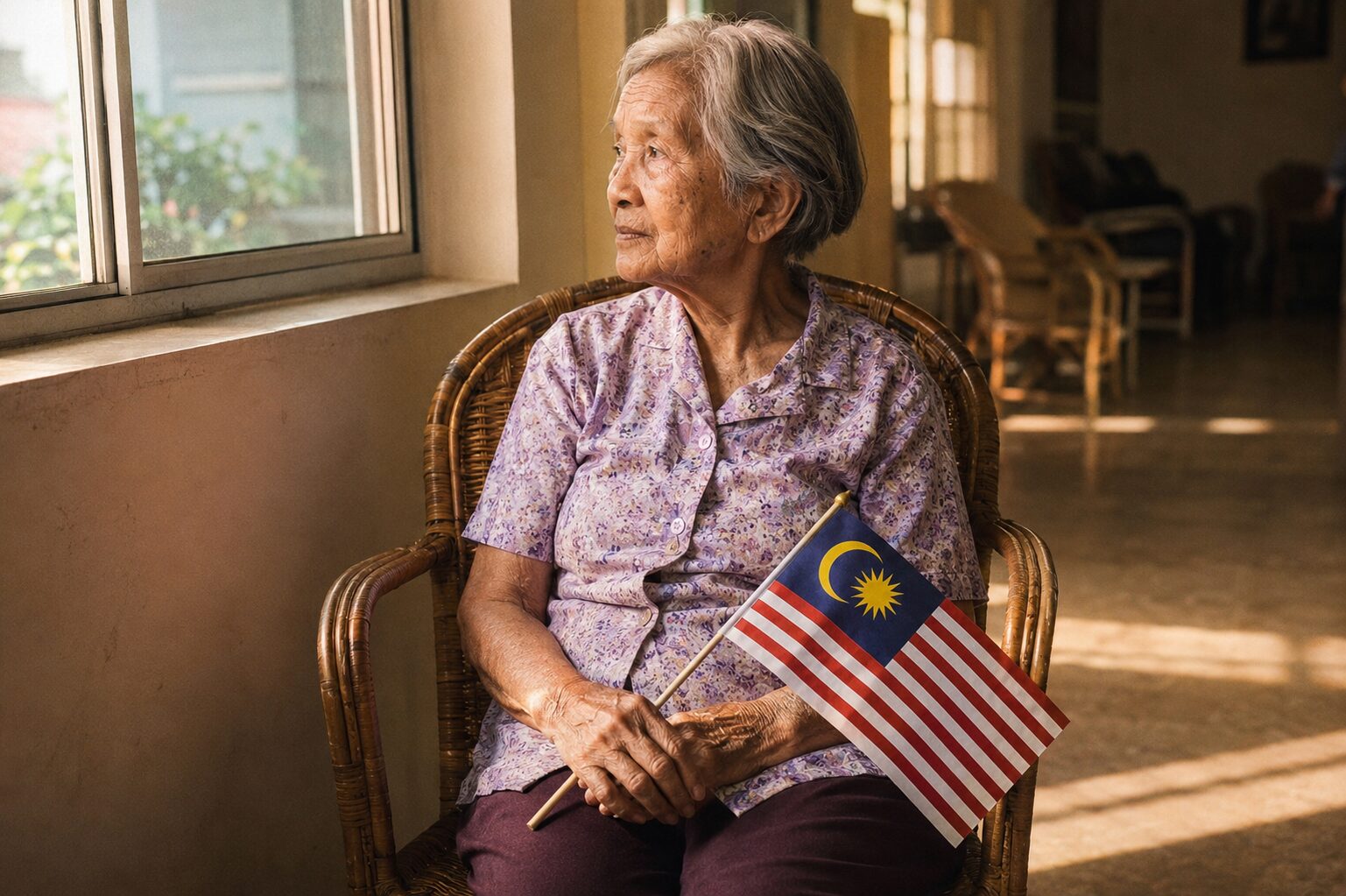
 Residents born in 1957 are with us now. They sit at the younger end of our population — the Merdeka-year cohort has only just reached the age where our kind of care starts to matter. Their generation built this country, and it’s their generation the country is now, slowly and imperfectly, building a care system for. When they were young, care meant the kampung. The extended household. The daughter who stayed home. There was no other option, so nobody thought to ask whether there should be.
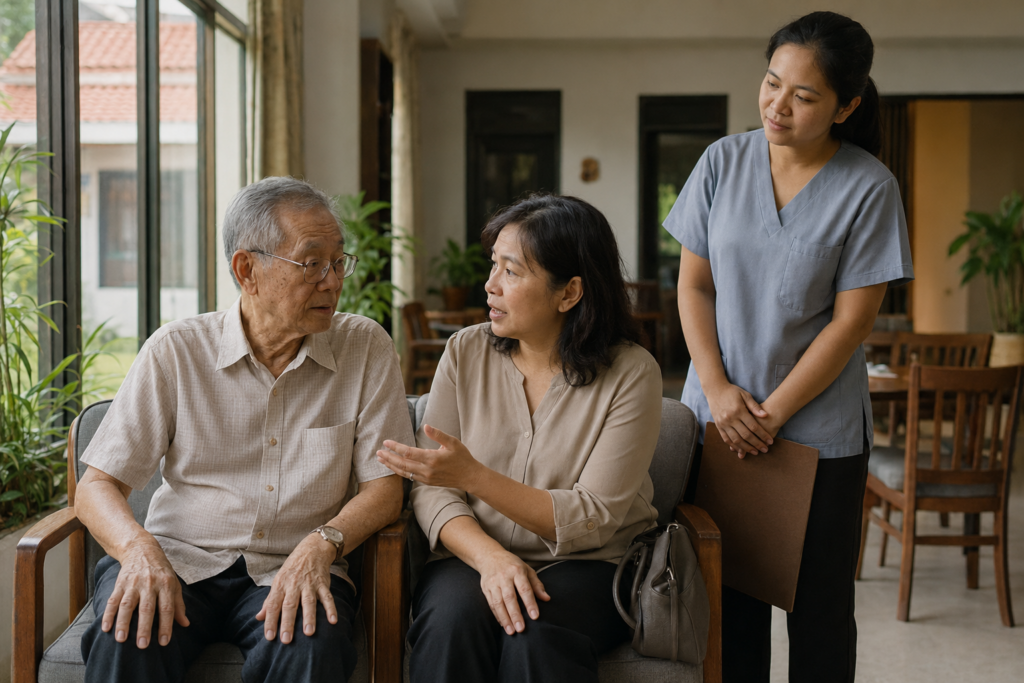
Their children are the ones I meet across the table. Forties, fifties, working, raising their own kids, deciding on a parent at the same time. Last Merdeka I wrote about the shame that sits in that decision — the families who told me people would say they were abandoning their mother. Twelve months on, the guilt hasn’t gone. It’s still in the room, and it should be. What’s changed is what sits beside it. They come in having read something. They ask about medication management and physiotherapy schedules. They’ve worked out for themselves that professional care and berbakti kepada ibu bapa aren’t opposites, and they no longer need me to tell them so.
Then there are our caregivers in their twenties. That’s the one that gets me. When Malaysia turned fifty, nobody announced at a family dinner that their daughter was going into caregiving. Now it’s a recognised professional occupation under the 13th Malaysia Plan, a national skills standard is close to done, and a twenty-four-year-old on my floor is building a career in work this country only recently agreed was one.
Three generations in one corridor. Sixty-nine years.
What Malaysia has actually done for long-term care
I’m usually the one pointing at gaps. So let me spend this Merdeka pointing at progress, because there’s more of it than most people realise and it has arrived quickly.
Long-term care is now written into national development planning through the 13th Malaysia Plan — not a footnote in a health chapter, but part of how Malaysia plans its next five years. The Pelan Tindakan Warga Emas Negara 2026–2030 turned that commitment into a working document. The MyCare framework sets out how a care workforce actually gets built, with a target of 50,000 skilled caregivers by 2030. Budget 2026 put money behind caregiver training. A national skills standard is in its final stages, and when it lands, “trained caregiver” will mean something verifiable in Melaka and Miri alike. The Senior Citizens Bill has been through its consultation rounds and is headed for Cabinet and Parliament. Long-term care insurance is under serious study.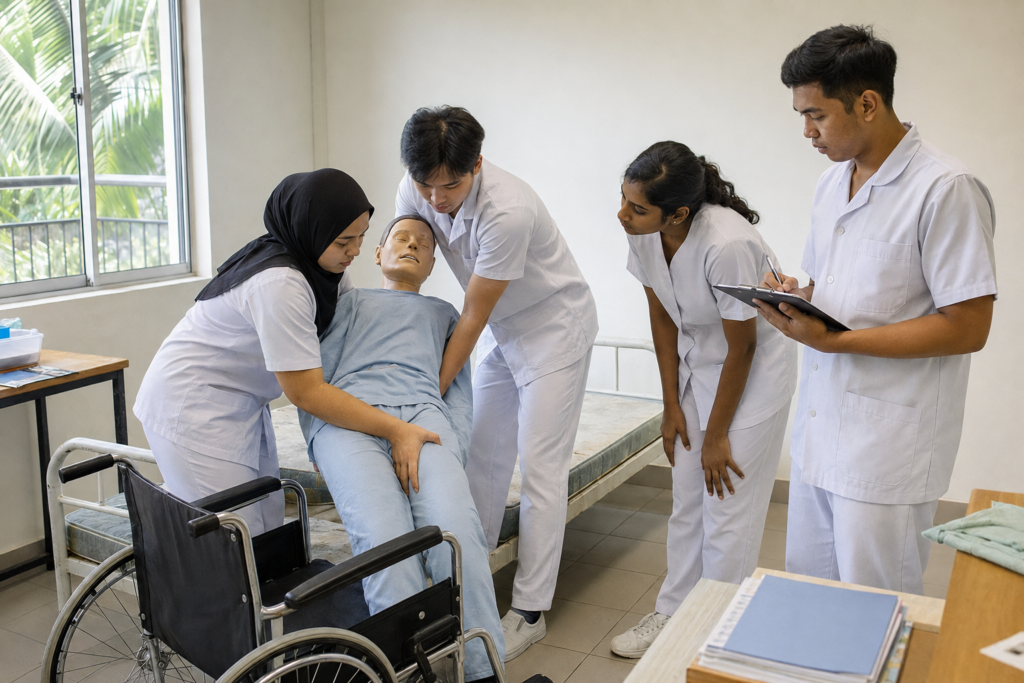
The silver economy is being treated as an economy, too. KWAP launched Jana MyPesara this year to fund retiree-led businesses, and in November Kuala Lumpur hosts the global Silver Economy Forum — its debut in ASEAN. That last one matters more than it looks. The people who write about ageing internationally are coming here to look at us, at a moment when we have something to show them. Two years ago I was explaining the basics to families in my own lobby.
The theme this year is Kesejahteraan Dinikmati. Wellbeing, enjoyed. For the generation that built this country, that word now comes with plans, budgets and a workforce attached. That’s new. It’s worth saying out loud before we go back to arguing about what’s still missing.
My Merdeka dream
 None of this is finished. The families I meet still teach me where the system falls short, and there’ll be time after the fireworks to write about that.
But this Merdeka, let me tell you what I’m dreaming about instead. Not a document. A conversation.
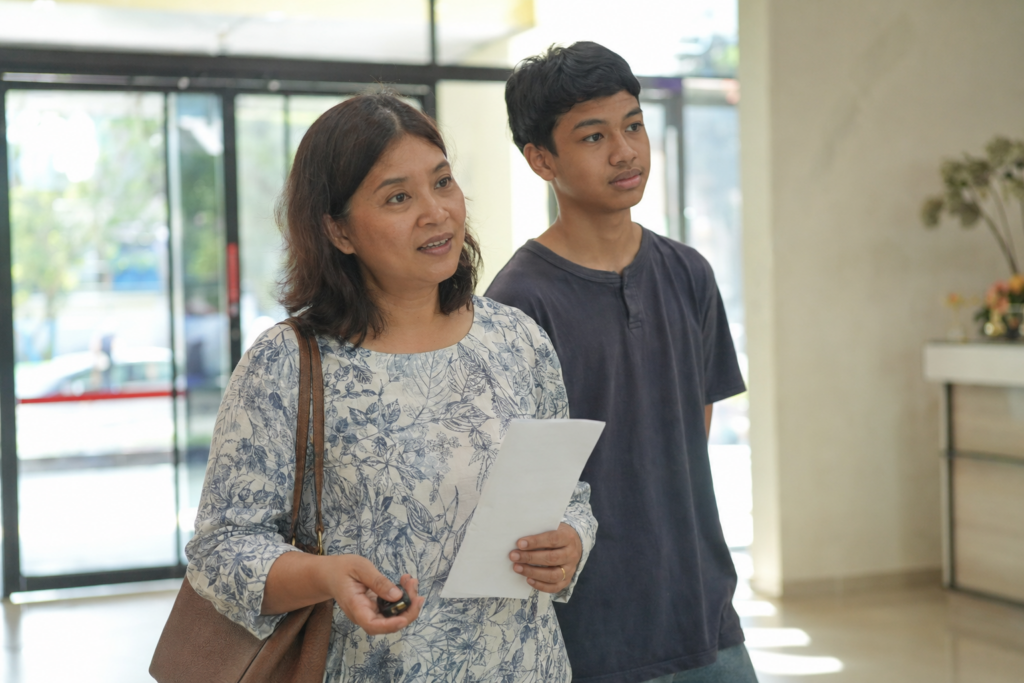
A family walks into our lobby a few Merdekas from now. They don’t need the twenty-minute explainer — that already sounds as dated as a rotary phone. They ask about our caregivers’ certification numbers. They ask which part of the fee their parent’s long-term care insurance covers. They ask hard, precise, well-informed questions, and every one of them tells me the same thing: this country taught its families a new language, and they’re speaking it fluently.
Two years ago, families thought we were an old folks home with a nicer lobby. Today they want to know who’s on the clinical team. My dream is only that the questions keep getting better — because from where I sit, that’s what sixty-nine years of Merdeka sounds like in a nursing home corridor in Melaka.
Selamat Hari Kebangsaan.
Denis Lim is Managing Director of BIGTREE Medicare & Nursing Home in Melaka and VP of AgeCope Melaka.
Leave A Comment